Sacred Flavors: 7 Thai Buddhist Temple Dishes and the Dhamma They Carry
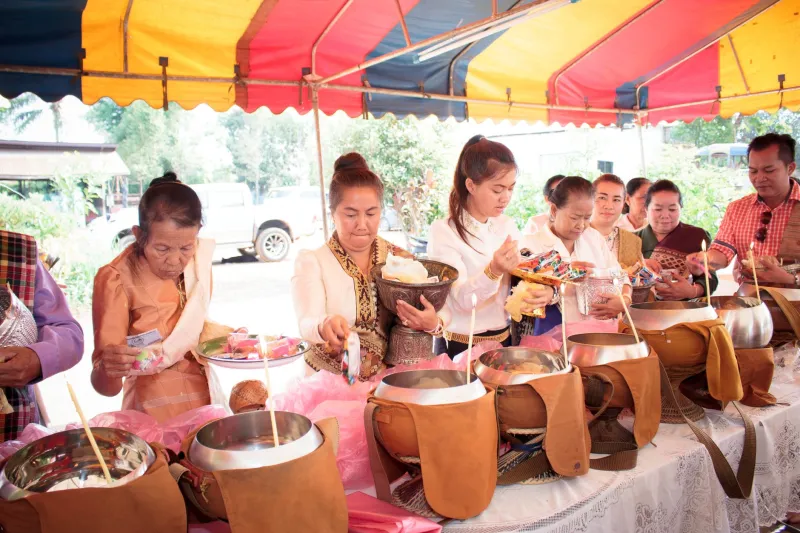
Step into the kitchen of almost any Thai Buddhist temple in the United States on a Saturday morning, and you will encounter something remarkable: a small army of laypeople — grandmothers directing traffic, teenagers chopping vegetables, fathers managing enormous woks — producing an abundant, fragrant meal for monks, volunteers, and visitors alike. The kitchen is loud, warm, and unmistakably alive.
This is not catering. It is practice.
In Thai Theravada Buddhism, the preparation and offering of food is among the most direct expressions of dana — generosity — available to laypeople. The intention brought to cooking, the care taken with ingredients, the willingness to give one's time and skill: all of these are understood as meritorious acts that cultivate the heart as surely as formal meditation. The dishes that emerge from these kitchens are, in a very real sense, edible Dhamma.
Here are seven of the most beloved, along with the spiritual values they embody and guidance for preparing them in your own home.
1. Khao Suay — Steamed Jasmine Rice
The Virtue of Simplicity
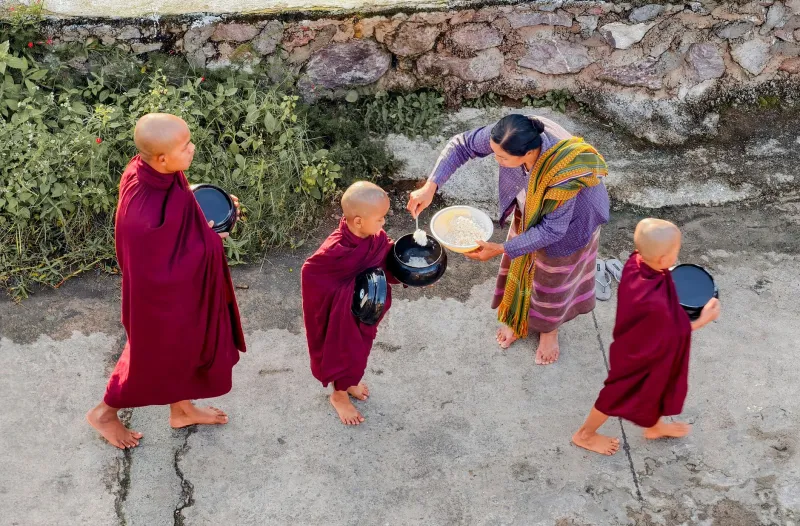
No dish is more fundamental to Thai Buddhist temple life than perfectly steamed jasmine rice. Offered first to monks every morning, it is the foundation upon which every other dish rests — and therein lies its teaching.
Jasmine rice embodies the virtue of upekkha — equanimity, or the quality of balanced, non-discriminating awareness. It is neither elaborate nor plain; it complements everything without overwhelming anything. It is the same for everyone at the table.
For the home cook, the key to authentic temple-style jasmine rice is the water ratio and the rest period. Use 1.5 cups of water for every cup of rice. After cooking, allow the rice to rest, covered, for ten minutes before serving. This patience — resisting the urge to lift the lid prematurely — is itself a small practice in trust.
Dhamma value: Equanimity (Upekkha)
2. Tom Kha Gai — Galangal and Coconut Soup with Chicken
The Warmth of Compassion
Rich, fragrant, and deeply comforting, tom kha gai is among the first dishes many Thai Americans prepare when a community member is ill, grieving, or newly arrived. Its warmth is understood as an expression of karuna — compassion — made tangible.
The galangal root that gives this soup its distinctive earthy depth is not always easy to find, but most Asian grocery stores in major American cities carry it fresh or frozen. Do not substitute ginger; the flavor profile is entirely different, and temple cooks will notice.
For a large temple batch: simmer four cans of full-fat coconut milk with two stalks of lemongrass (bruised), six slices of galangal, and four kaffir lime leaves for fifteen minutes before adding chicken and mushrooms. Season with fish sauce and lime juice. The soup should taste simultaneously rich and bright — a balance that mirrors compassion itself, which holds suffering without being consumed by it.
Dhamma value: Compassion (Karuna)
3. Pad Thai — Stir-Fried Rice Noodles
Interconnection and Balance
Perhaps the most recognizable Thai dish in America, pad thai carries a meaning in temple contexts that its ubiquity in strip-mall restaurants tends to obscure. When prepared for a community gathering, the dish — with its layered textures of soft noodle, crisp sprout, tender egg, and crunchy peanut — is understood as a meditation on paticca-samuppada: dependent origination, the Buddhist teaching that all phenomena arise in relationship to one another.
No single ingredient dominates. The tamarind's sourness requires the fish sauce's salt; the peanut's richness requires the lime's acidity. Remove any element and the dish collapses. This interdependence is not incidental — it is the point.
For an authentic home version, source tamarind paste rather than relying on pre-made pad thai sauce. Soak dried tamarind in warm water, press through a sieve, and combine with palm sugar and fish sauce. This three-part base, adjusted to your taste, is the heart of the dish.
Dhamma value: Interdependence (Paticca-Samuppada)
4. Kaeng Massaman — Massaman Curry
The Patience of Long Practice
Massaman curry is not a quick dish. Its flavors — warm spices, slow-cooked potato, tender meat, roasted peanuts — develop over hours of unhurried simmering, and any attempt to rush the process produces a noticeably inferior result. Temple cooks begin massaman the evening before a major ceremony.
This requirement for patience makes massaman a natural teaching on viriya — diligent, sustained effort — and its companion virtue, khanti, or patient endurance. The Dhamma path is not completed in a single meditation session any more than massaman is completed in twenty minutes. Both reward the practitioner who returns, again and again, to the work.
For home preparation, use a quality store-bought massaman paste as a foundation and enhance it with additional toasted cumin, cardamom, and cinnamon. Add potatoes, onion, and your protein of choice to a base of coconut milk and simmer on low heat, partially covered, for at least ninety minutes. The result should be deeply fragrant and almost impossibly rich.
Dhamma value: Patient Effort (Viriya and Khanti)
5. Khao Tom — Rice Porridge
Humility and Nourishment
Khao tom — rice porridge, or congee — is the most humble dish on this list and, in many ways, the most spiritually significant. It is the dish offered to monks during illness, prepared for elderly community members, and served at the quietest, most intimate temple gatherings. It asks nothing of the eater and gives everything.
In Thai Buddhist culture, khao tom embodies anicca — impermanence — in its very texture. The rice grains dissolve into the broth, losing their individual form to become something nourishing and whole. This dissolution is not loss; it is transformation.
To prepare: simmer one cup of jasmine rice in six cups of chicken or vegetable stock over low heat, stirring occasionally, until the rice breaks down into a creamy, porridge-like consistency, approximately forty-five minutes. Season simply with white pepper, ginger, and a small amount of fish sauce. Garnish with green onion and crispy garlic.
Dhamma value: Impermanence (Anicca)
6. Mango Sticky Rice — Khao Niao Mamuang
Joy and Generosity of Spirit
If any dish captures the pure, uncomplicated joy of Thai temple celebration, it is mango sticky rice. Prepared for Songkran, Visakha Bucha, and virtually every occasion of communal happiness, it is the taste of mudita — sympathetic joy, or the capacity to delight in the happiness of others.
The glutinous rice, soaked overnight and steamed in bamboo baskets, is saturated with sweetened coconut cream and served alongside ripe mango — ideally Ataulfo or honey mangoes, widely available in the United States during spring and summer months. The combination is so straightforwardly pleasurable that it tends to produce spontaneous smiles, which is, perhaps, the teaching.
For home preparation, soak glutinous rice for at least eight hours before steaming. Warm coconut cream with palm sugar and a pinch of salt, then fold into the hot steamed rice and allow to absorb for twenty minutes. Serve at room temperature with sliced ripe mango and a drizzle of additional coconut cream.
Dhamma value: Sympathetic Joy (Mudita)
7. Nam Prik Ong — Northern Thai Tomato and Pork Dip
Community and Sharing
Less familiar outside Thai communities than some dishes on this list, nam prik ong is a northern Thai specialty — a deeply flavored, slow-cooked dip of tomatoes, ground pork, and aromatics — that exemplifies the communal nature of temple eating. It is never served alone; it arrives surrounded by raw and blanched vegetables, rice, and other accompaniments, inviting everyone at the table to reach, share, and interact.
This architecture of sharing — dishes placed at the center, eaten together — reflects the sangha ideal of community life. There is no individual plate in the traditional sense; there is a table, and there are people around it.
To prepare: pound shallots, garlic, dried chilies, and shrimp paste in a mortar (or blend briefly in a food processor) and fry in oil until fragrant. Add ground pork and cook through, then add diced tomatoes and simmer until thick and deeply colored, approximately thirty minutes. Serve with cucumber, cabbage, long beans, and steamed rice.
Dhamma value: Community and Sangha
A Final Word From the Kitchen
The dishes described here are not museum pieces. They are made every weekend in temple kitchens from California to Florida, prepared by hands that carry both culinary memory and spiritual intention. To cook them at home — with attention, with care, and with some awareness of the values they embody — is to participate, in a small but genuine way, in that living tradition.
Set aside the recipe card for a moment before you begin. Consider what you are making, and for whom. Then cook.