Mark Your Calendar: A Guide to Buddhist and Thai Cultural Festivals at American Temples in 2026
A Year of Celebration, Reflection, and Community
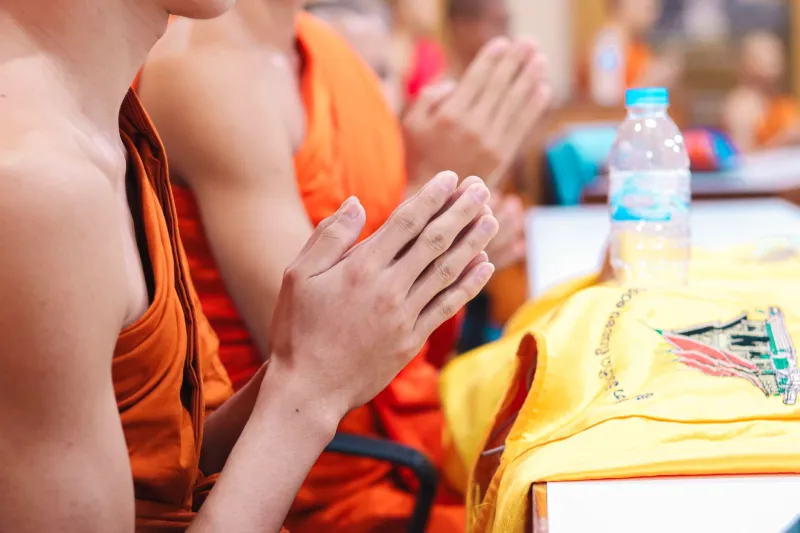
For Thai Buddhist communities across the United States, the annual calendar is punctuated by festivals that carry equal measures of spiritual significance and cultural joy. These observances are not merely occasions for nostalgia or ethnic solidarity — though they are certainly that as well. At their heart, each festival embodies a teaching, a practice, or a moment in the Buddhist sacred year that invites participants to pause, reflect, and reconnect with something larger than daily routine.
Whether you are a longtime member of a Thai Buddhist temple, a curious neighbor, or someone newly exploring Southeast Asian culture and spirituality, 2026 offers abundant opportunities to engage. The following guide covers the major festivals of the year, their significance, typical dates, and practical advice for respectful participation.
Māgha Pūjā — February
What it commemorates: One of the most sacred days in the Theravāda calendar, Māgha Pūjā marks the spontaneous gathering of 1,250 enlightened monks before the Buddha, who delivered the Ovāda Pāṭimokkha — the core summary of his teaching. The occasion is observed with candlelit circumambulation (wian tian) of the temple's main hall, chanting, and meditation.
Typical date: The full moon of the third lunar month, falling in mid-to-late February in 2025.
Where to observe: Thai Buddhist temples in California, Texas, Illinois, New York, and Florida regularly hold Māgha Pūjā observances. Check with your nearest Thai temple for specific programming.
How to participate respectfully: Dress modestly in white or muted colors if possible. Remove shoes before entering the temple hall. Follow the lead of experienced practitioners during the circumambulation. Silence your phone and refrain from photography during formal chanting and meditation periods unless the temple explicitly invites it.
Songkran — April 12–15
What it commemorates: Thailand's traditional New Year, rooted in the solar calendar, Songkran is perhaps the best-known Thai festival outside of Thailand. The ritual pouring of water — over Buddha images, the hands of elders, and eventually, in the more exuberant street celebrations, over everyone within range — symbolizes purification, the washing away of misfortune, and the renewal that a new year brings.
Typical dates: April 12–15, 2025, with temple celebrations often concentrated on the weekend nearest these dates.
Where to observe: Songkran events are held at Thai temples and cultural centers in virtually every major American metropolitan area. Los Angeles, Houston, Chicago, and the Washington, D.C. area host some of the largest celebrations, often drawing thousands of attendees from both Thai and non-Thai communities. Thai Town in Los Angeles typically anchors one of the country's most vibrant public Songkran festivals.
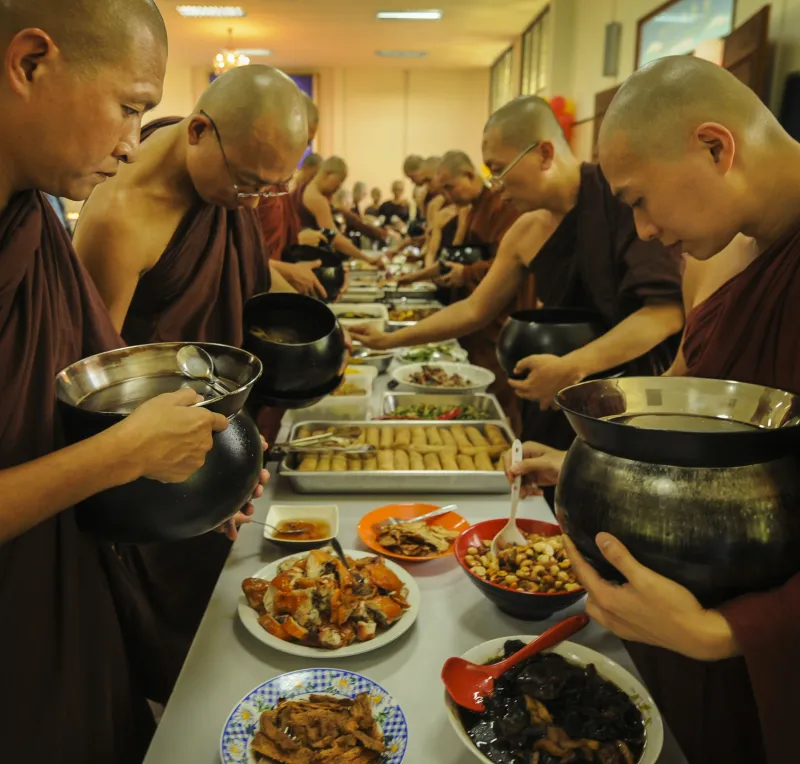
How to participate respectfully: The formal, temple-centered portion of Songkran — merit-making, offering food to monks, and the ceremonial bathing of Buddha images — carries deep spiritual weight and should be approached with corresponding reverence. The festive water activities that follow are generally welcoming to all. Wear clothes you don't mind getting wet, and be mindful that elderly participants and monks are greeted with the gentle pouring of scented water over their hands, not splashed.
Visakha Bucha — May
What it commemorates: Considered the holiest day in the Theravāda Buddhist calendar, Visakha Bucha commemorates three pivotal events in the Buddha's life — his birth, his enlightenment, and his passing into final Nibbāna — all said to have occurred on the full moon of the sixth lunar month. Observances emphasize meditation, Dhamma reflection, and the candlelit wian tian ceremony.
Typical date: The full moon of the sixth lunar month, falling in May 2025 (exact date varies by year and lunar calendar).
Where to observe: All Thai Buddhist temples in the United States observe Visakha Bucha. This is among the most attended temple days of the year and often includes extended Dhamma talks, opportunities to take the Eight Precepts for the day, and communal vegetarian meals.
How to participate respectfully: Visakha Bucha is a day of particular solemnity and spiritual focus. Visitors are warmly welcomed, but the atmosphere is contemplative rather than festive. Arriving early for the morning merit-making and staying for the evening wian tian ceremony offers the fullest experience of the day's significance.
Khao Phansa — July
What it commemorates: The beginning of the Buddhist Lent (Vassa or Phansa), Khao Phansa marks the start of a three-month period during which monks traditionally remain at their home monastery, intensifying their practice and study. Laypeople often take this period as an opportunity to deepen their own practice — observing additional precepts, attending more frequent Dhamma talks, or reducing activities that distract from spiritual cultivation.
Typical date: The first day of the waning moon in the eighth lunar month, falling in July 2025.
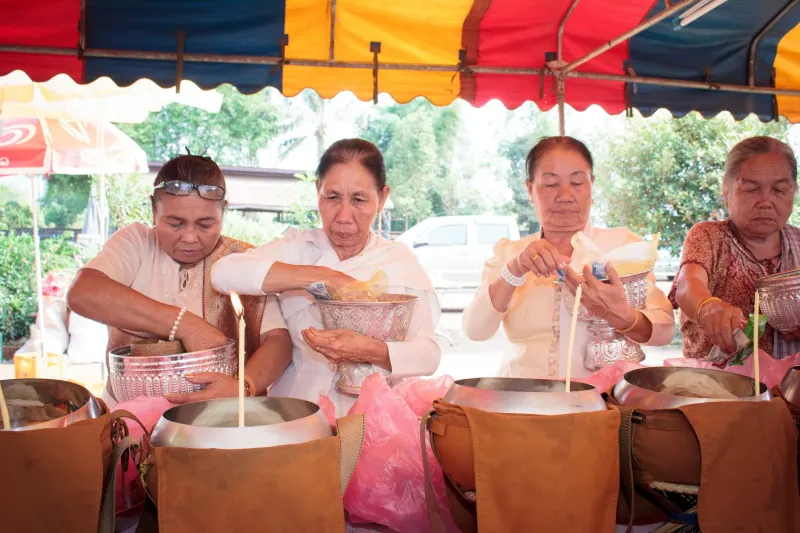
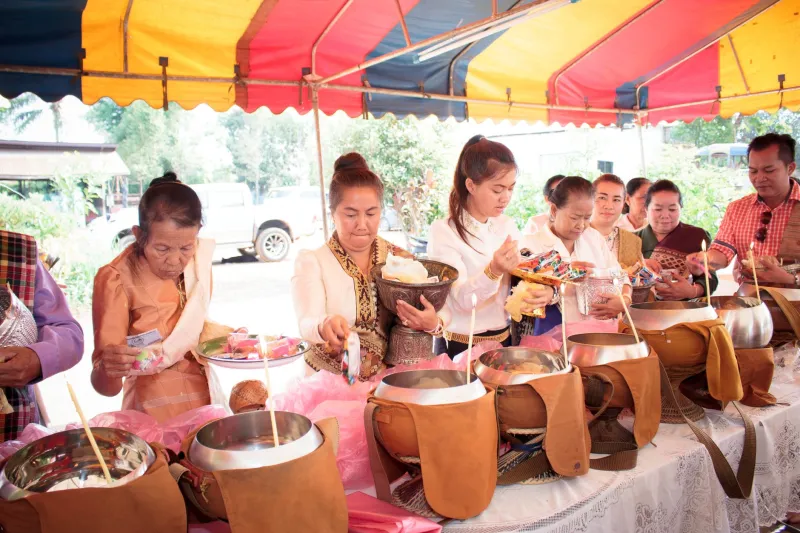
Community significance: Khao Phansa is also the occasion on which laypeople traditionally offer monks the requisites they will need during the Rains Retreat — robes, candles, and other necessities. Participating in this offering is considered an act of significant merit and an expression of the lay-monastic relationship that sustains the Buddhist community.
Ok Phansa and Kathin — October–November
What it commemorates: Ok Phansa marks the end of the Rains Retreat and is followed by the Kathin season — a one-month window during which laypeople may present robes and supplies to monks who have completed the retreat. Kathin is one of the most communally significant events of the Buddhist year, often involving elaborate processions, cultural performances, and large-scale merit-making gatherings.
Typical dates: Ok Phansa falls on the full moon of the eleventh lunar month (typically October); the Kathin season extends through November.
Where to observe: Thai temples across the country hold Kathin ceremonies, often on different weekends to allow community members to attend multiple events. These gatherings are among the most festive and culturally rich of the year, frequently featuring traditional Thai music, dance, and food.
Loy Krathong — November
What it commemorates: Held on the full moon of the twelfth lunar month, Loy Krathong is a festival of gratitude and release. Participants place small decorated floats (krathong) made from banana leaves, flowers, and candles onto rivers, lakes, or temple ponds, offering thanks to the water spirits and symbolically releasing grievances, regrets, and accumulated burdens.
Typical date: The full moon of November 2025.
Where to observe: Many Thai temples in the United States hold Loy Krathong events, particularly those situated near bodies of water. Community centers in cities with large Thai populations often organize public celebrations that are open and welcoming to all.
How to participate respectfully: Krathong are typically available for purchase or assembly at temple events. Before releasing your float, take a moment to reflect genuinely on what you wish to release or offer gratitude for — the practice is more meaningful when approached with intention rather than as a purely aesthetic activity.
A Note on Visiting Thai Buddhist Temples
For those new to Thai Buddhist spaces, a few general guidelines will help ensure that your visit is both enjoyable and respectful. Dress modestly — shoulders and knees covered is the standard expectation. Remove your shoes before entering any temple building. Greet monks and senior practitioners with a respectful bow rather than a handshake. Refrain from pointing your feet toward Buddha images or monks while seated. And above all, approach these spaces with curiosity and genuine openness: the communities that maintain them have worked hard to keep their traditions alive in a new land, and they welcome those who come in that spirit.
For the most current schedules, contact information, and event details, we encourage readers to reach out directly to their nearest Thai Buddhist temple or to follow the community updates at watpahsunan.org throughout the year.