Restless in the Stillness: Why Doing Nothing Is the Hardest Thing Americans Will Ever Practice

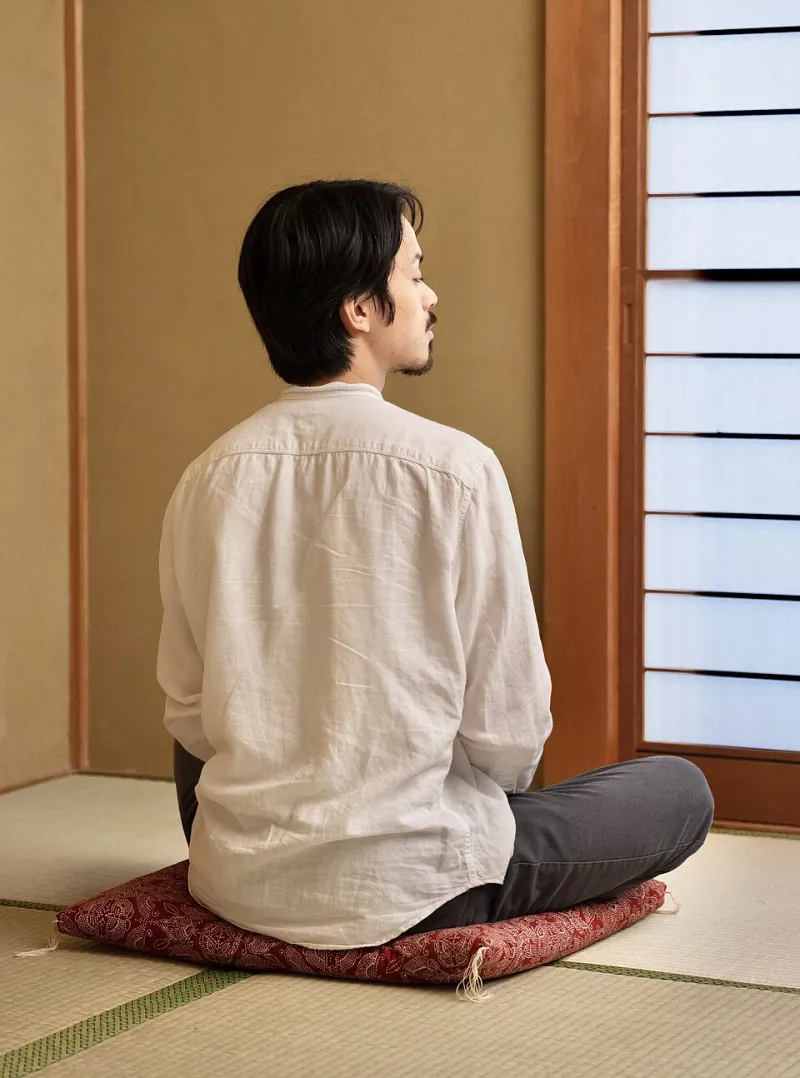
There is a particular kind of suffering that arrives not in crisis, but in quiet. It surfaces the moment a practitioner closes their eyes, straightens their spine, and attempts — genuinely attempts — to do absolutely nothing. Within seconds, the mind begins to negotiate. Am I doing this correctly? How long has it been? Should I be feeling something by now? The body follows, shifting, adjusting, reaching for the reassurance of productivity.
This is not a failure of discipline. According to teachers and long-term practitioners within the Thai Forest Tradition and broader American Buddhist communities, it is something far more systemic — a collision between the ancient technology of stillness and a cultural operating system built entirely around motion.
The Productivity Gospel and Its Hidden Costs
The United States has, for most of its modern history, organized meaning around output. To be valuable is to be useful. To be useful is to be busy. Rest, in this framework, is not restoration — it is a brief pause before the next task. Even leisure has been productized: vacations become experiences to optimize, weekends become opportunities to get ahead.
"When American students first sit with me, the question I hear most is not 'What should I do?' — it is 'Am I doing enough?'" says one senior Dhamma teacher who has taught at Thai Buddhist temples across the Pacific Northwest for more than two decades. "The assumption is always that more effort produces more result. But in meditation, that equation breaks down completely."
The Thai Forest Tradition, which forms the spiritual backbone of communities like Wat Pah Sunan, places enormous emphasis on upekkha — equanimity — and on the cultivation of a quality of awareness that neither grasps nor rejects. This is not passive indifference. It is an extraordinarily refined form of presence. But to a practitioner conditioned by a culture that rewards relentless striving, the instruction to simply be can feel not like liberation, but like abandonment.
What the Research Suggests — and What It Misses
The American wellness industry, to its credit, has brought meditation to millions of people who might never have encountered it otherwise. Apps, corporate mindfulness programs, and eight-week stress-reduction courses have normalized the practice in ways that would have seemed improbable a generation ago. Yet something has also been quietly edited out in the translation.
Many secular mindfulness programs frame meditation primarily as a performance-enhancement tool — a method for reducing cortisol, improving focus, and increasing workplace efficiency. These are not false claims. But they also reframe stillness as a means to an end, which is precisely the orientation the practice is designed to dissolve.
"The problem is not that people learn to meditate for productivity," reflects a lay practitioner and teacher who has studied in both American and Thai monastic settings. "The problem is that they never learn to stop meditating for anything. They never discover what the practice is pointing toward once you remove the goal."
This distinction — between meditation as technique and meditation as orientation — sits at the heart of what Thai Buddhist teachers often describe as the difference between samatha practice, the cultivation of calm, and the deeper inquiry into the nature of mind itself.
The Cultural Conditioning Beneath the Cushion
Several practitioners interviewed for this piece described a specific and recurring experience: a wave of anxiety that arrives not during difficulty in meditation, but during ease. When the mind genuinely quiets — when the chatter subsides and a spacious awareness briefly opens — the response is not relief. It is alarm.
"I remember the first time I had a truly still sit," recalls one practitioner who has been attending a Thai Buddhist temple in the Midwest for six years. "My first thought was, 'Something must be wrong.' I actually opened my eyes to check. The stillness felt threatening. I didn't trust it."
Teachers across traditions recognize this pattern. It has a name in some circles: the productivity reflex — the automatic interpretation of stillness as stagnation, of non-doing as negligence. For practitioners raised in environments where worth is contingent on measurable contribution, the absence of mental activity can trigger genuine discomfort.
The Thai concept of santikham — peaceful action, or the peace that is itself a form of doing — offers a reframe that some practitioners find transformative. In this understanding, stillness is not the absence of engagement with life. It is the deepest possible engagement: an attention so complete that it requires nothing added to it.
Relearning Rest as Resistance
What emerges from conversations with teachers and practitioners is not a critique of American culture so much as a compassionate diagnosis. The restlessness that Americans bring to the meditation cushion is not a character flaw. It is a learned response to a social environment that has, for generations, made stillness feel dangerous.
One teacher frames it this way: "To sit and do nothing in America is almost a radical act. You are refusing, for that period of time, to be useful. You are saying that your value does not depend on what you produce. For many people, that is genuinely frightening before it becomes freeing."
This reframe — stillness as a form of quiet resistance to the productivity gospel — has resonated with many practitioners who initially arrived at meditation seeking performance gains and found themselves, unexpectedly, confronting something much older and more fundamental.
The path forward, as teachers in the Thai Forest Tradition tend to emphasize, is not to fight the restlessness. It is to observe it with the same patient, non-judgmental awareness one brings to any other arising in the mind. The restlessness, too, is a teacher. And in learning to sit with it — not to fix it, not to overcome it, but simply to see it clearly — the practitioner begins, slowly, to loosen the grip of the culture that created it.
The Space That Was Always There
There is an image that recurs in Ajahn Chah's teachings, one that many American practitioners encounter early in their study: the image of still water. Not water made still through effort, but water that reveals its stillness once the agitation subsides. The stillness was never absent. It was simply obscured.
For American practitioners wrestling with the silence between thoughts, this may be the most important reorientation of all. The goal is not to manufacture a state that does not yet exist. It is to recognize — with patience, with gentleness, and without the demand for immediate results — what was present all along.
That recognition, teachers suggest, cannot be achieved through more effort. It can only be allowed. And learning to allow, in a culture built on achieving, may be the most profound practice of all.