Between Two Worlds: Young Thai-Americans and the Search for a Faith to Call Their Own
The Temple of Childhood Memory
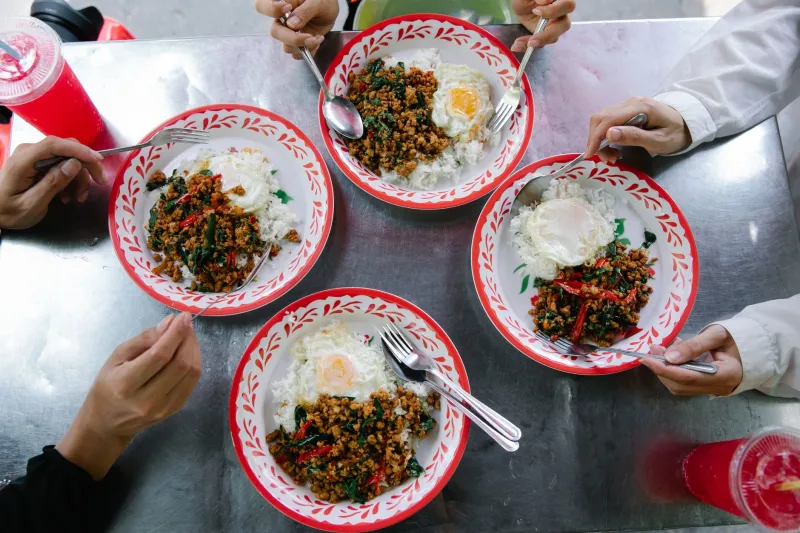
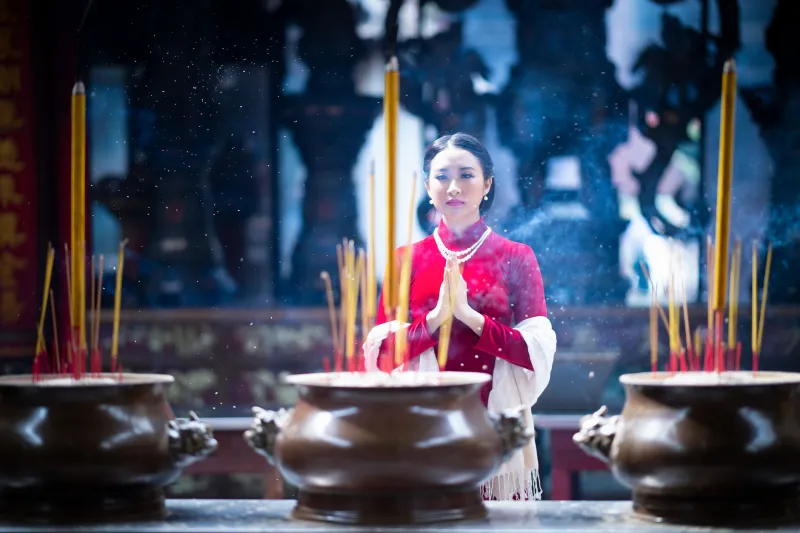
Ask a group of Thai-American young adults about their earliest memories of the temple, and the responses tend to follow a familiar arc. There is the smell of jasmine garlands and sandalwood. There is the sound of monks chanting in Pali — beautiful, rhythmic, and largely incomprehensible. There are the long hours sitting quietly while parents and grandparents moved through rituals whose significance was rarely explained. And there is, almost universally, the food: the communal meals that somehow made everything feel less foreign and more like home.
For many in the second generation, the temple of childhood was a cultural obligation more than a chosen spiritual home. Born and raised in the United States, educated in American schools, fluent in English long before Thai, these young people inhabited two worlds simultaneously — and often felt fully at ease in neither.
Now, in their twenties and thirties, a significant number are finding their way back. Not because their parents insisted, but because something in them is asking questions that require more than what the surrounding culture offers.
The Questions That Brought Them Back
Nam Siriporn, 27, grew up in suburban Minnesota and describes her relationship with Buddhism during high school as "essentially nonexistent." She attended temple events on major holidays, primarily because refusing would have upset her mother. The teachings, when she encountered them at all, arrived filtered through her parents' Thai-language explanations — summaries that, she says, often emphasized ritual correctness over meaning.
"I knew I was Buddhist the way some of my American friends knew they were Catholic," she says. "It was a label, not a practice. And for a long time, that felt fine."
The shift came during her junior year of college, when a philosophy course introduced her to translated texts from the Pali Canon. Reading the Dhammapada in English — encountering the Buddha's teachings in a language she could fully absorb — was, she says, like discovering that the building she had always passed on the street was actually her ancestral home.
"I realized the tradition I had been born into had answers to the questions I was already asking," she says. "I just hadn't been given the keys."
The Language Gap and the Bridge Builders
Nam's experience points to one of the central challenges facing Thai Buddhist temples in the United States: the language divide. First-generation immigrants built these communities around Thai-language services, Thai-language Dhamma talks, and Thai cultural practices that served as an anchor in a new country. This was entirely appropriate and deeply necessary. But it created an unintended consequence: a generation of American-born children who grew up on the periphery of a tradition nominally their own.
Some temples have begun addressing this directly. Bilingual Dhamma programs, English-language meditation instruction, and youth groups that engage questions of identity alongside questions of practice are emerging at Thai Buddhist centers across the country. At communities affiliated with the forest tradition — including temples inspired by the lineage honored at Wat Pah Sunan — there has been a particular emphasis on making the teachings themselves, rather than cultural forms alone, accessible to younger and non-Thai practitioners.
Phra Ajahn Wichai, who teaches at a Thai forest monastery in the Southeast, describes the challenge as one of translation in the deepest sense. "We are not just translating words from Thai to English," he says. "We are translating an entire way of understanding the mind and the world. That takes time, patience, and genuine dialogue between generations."
Intergenerational Negotiation
For many young Thai-Americans, returning to the temple also means navigating complex conversations with parents who may have mixed feelings about their children's renewed engagement. Some parents are quietly overjoyed. Others are puzzled that a child who resisted temple attendance throughout adolescence is now asking to attend meditation retreats.
There are also tensions around authenticity. Parents who built temple communities as cultural refuges sometimes feel uncomfortable when their children begin questioning certain practices, asking for English explanations, or bringing non-Thai friends. The temple, for the first generation, is often deeply intertwined with Thai national identity. For the second generation, the appeal lies precisely in the universal dimensions of the Dhamma — teachings that transcend ethnicity, language, and national origin.
These tensions, when navigated with care, can be generative. Several young practitioners describe conversations with parents and monks that became unexpectedly profound — moments when the act of asking "why do we do this?" opened doors to teachings that had never been formally shared.
"My dad cried when I told him I wanted to take the precepts," recalls David Tanakorn, 31, a graphic designer in Atlanta whose Thai name he now uses professionally. "He said he had prayed for that for years but never thought it would happen. I think he assumed America had taken that possibility away from me."
The Temple as a Third Space
Beyond spiritual practice, the temple is serving a distinct social function for young Thai-Americans: it is one of the few places where their dual identity is not a problem to be managed but a resource to be honored. In American professional and social environments, Thai heritage is often either invisible or reduced to food and festivals. Within Thai family contexts, American identity can feel like a source of anxiety or loss. The temple, at its best, holds both.
Community events, cultural celebrations, and service projects at Thai Buddhist temples are increasingly drawing young adults who are as interested in connection with peers who share their background as they are in formal religious observance. Songkran celebrations, merit-making ceremonies, and volunteer kitchen shifts have become occasions for friendships that bridge the gap between Thai heritage and American upbringing.
A Living Tradition
What the second generation is discovering — sometimes to their own surprise — is that Buddhism is not a museum exhibit of their parents' homeland. It is a living tradition, one that has always adapted to new conditions while preserving its essential core. The young Thai-Americans returning to the temple are not simply reclaiming a heritage. They are, in a meaningful sense, continuing it — carrying the Dhamma forward into a new generation and a new cultural context, just as their ancestors did before them.